
Economy Builder Partner Stories:
Stephen Tucker and the Western New York Manufacturing and Tech Workforce Coalition
Building a Workforce System That Works for Everyone
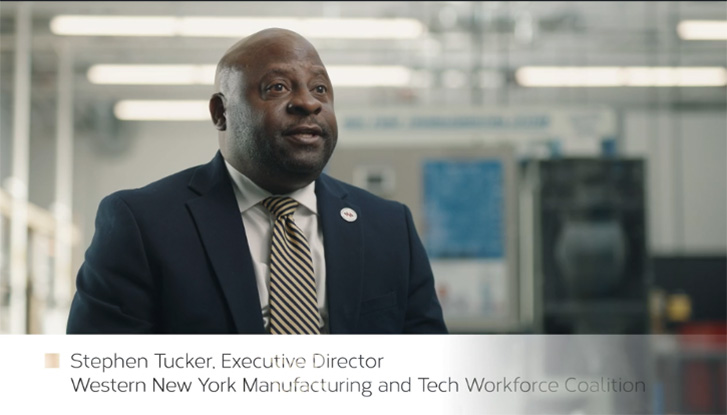
When Stephen Tucker stepped into his role as Executive Director of the Western New York Manufacturing & Tech Workforce Coalition, the challenge was already clear: Western New York was facing a widening gap between available jobs and the talent needed to fill them.
“The reality is,” Tucker says, “it’s going to take all of us to meet the demand of skilled workers in the advanced manufacturing and tech sector.”
The coalition was formed to do exactly that—bringing employers, trainers, funders, and workforce partners together to create a more coordinated, responsive workforce system that serves both businesses and job seekers.
The Genesis of the Coalition
The Western New York Manufacturing & Tech Workforce Coalition was formed in 2023 to address a pressing workforce reality. Over the next decade, the region is expected to see approximately 20,000 job openings in manufacturing alone, driven largely by retirements and an aging workforce. A similar challenge exists in the tech sector, where job growth is outpacing the talent pipeline.
“There are a whole bunch of jobs that pay family-sustaining wages,” Tucker explains, “but not enough people with the skills to compete and fill these roles.”
Before the coalition existed, many workforce programs and resources were already in place, but they were fragmented and difficult for employers to navigate. Smaller and mid-sized companies, in particular, struggled to tap into training systems or influence what skills were being taught.
The coalition changed that by creating a single, employer-informed ecosystem
An Employer-Led Workforce Intermediary
The coalition operates as a workforce intermediary built around employer leadership. A Coalition Council, made up of more than 60 manufacturing and tech employers, sets strategic direction and ensures training investments remain market-driven and address real hiring needs.
Rather than designing programs in isolation, the coalition listens first. Employer input and labor market data guide decisions about what training to offer, when to offer it, and how to evolve programs as industry needs change. Training providers work alongside employers to align curricula with both current and emerging skill demands.
“We want people to gain entry-level skills, move into entry-level roles, and then be upskilled into more advanced positions,” Tucker says. “Each step increases income and puts people on a path to success.”
This approach allows the coalition to respond quickly to shifts in the regional economy. As new opportunities emerge—such as semiconductor manufacturing or renewable energy technologies—the coalition positions itself to build training pathways as soon as employers define the skills required.
“We may not know exactly what those jobs are yet,” Tucker explains, “but when we do, we’ll be ready to provide the training.”
Turning Collaboration into Results
The coalition’s employer-driven model is already delivering results. In response to manufacturer demand, the coalition partnered with Northland Workforce Training Center to launch a new HVAC training program, preparing workers for high-demand careers that can’t be outsourced.
Another early success story is the Finishing and Deburring program, a highly specialized manufacturing skill that Tucker admits he hadn’t known was in demand until employers raised it. Once the need was identified, training providers and funders were quickly rallied to develop a customized program.
The result was 100% job placement for the program’s first cohort. “That wouldn’t have happened without the coalition,” Tucker says.
Since its launch, the coalition has grown to include more than 80 stakeholders, including employers, training providers, and workforce organizations. That structure allows the strategy to move quickly into action.
Across the coalition’s first two years, more than 600 people have been trained, over 400 have been placed. Many have been placed in jobs earning between $45,000 and $50,000 annually.
CRS as the Backbone of the Coalition
Central to the coalition’s success is the role of the Center for Regional Strategies (CRS), which Tucker describes as instrumental to both its formation and sustainability.
“They’re the backbone organization,” he says. “They provide capacity, access to funding, and best practices. Not just for workforce development, but for entrepreneurship and placemaking as well.”
CRS convenes partners, attracts funding, and ensures the coalition stays focused on long-term regional impact rather than short-term wins.
Looking Ahead: Scaling Impact Together
The coalition continues to evolve, adding employers strategically, expanding training programs in response to demand, and seeking new funding to scale its impact.
If the coalition meets its long-term goals, the regional payoff is substantial. Training and placing hundreds of workers into family-sustaining jobs could generate more than $50 million annually in wages, reinvested directly into the local economy.
“It’s going to take employers, trainers, workforce boards, and intermediaries all working together,” Tucker says. “That collaborative spirit is the only way we meet the workforce demands of the future, and build a stronger Western New York for everyone.”